
Written by Marie Oxland | Personal Injury | 06 November 2026
When someone is injured because of another person's fault, the law tries to put them back, so far as money can, in the position they would have been in if the accident had never happened. Money cannot undo a broken leg or take away pain but it is the only tool the court has so everything gets turned into a figure.
That figure is built from two very different kinds of loss. Lawyers call them general damages and special damages. They are proved in different ways and the court calculates them using completely different methods. Just think of general and special damages as two buckets, each holding several items.
A quick word on jargon: lawyers sometimes call the total value of a claim the "quantum," and each separate type of loss a "head of loss."
General Damages: compensation for the harm itself
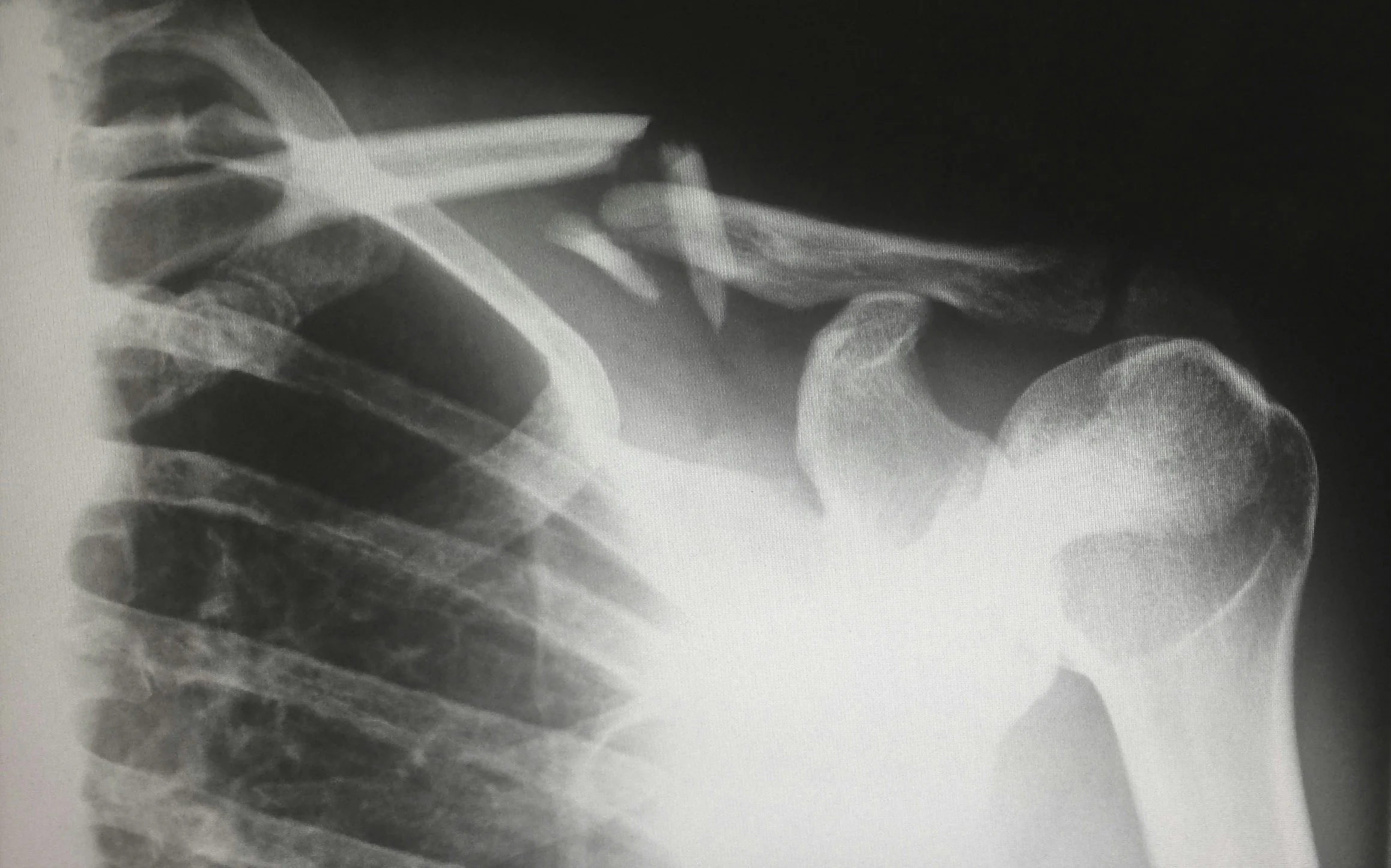
What it covers: general damages are for things that have no price tag, such as the pain of the injury, the suffering and distress it causes, and the loss of enjoyment of life that comes with it. Lawyers group these together under the label "pain, suffering and loss of amenity" (often shortened to "PSLA"). "Loss of amenity" simply means no longer being able to do the things you used to do and enjoy, for example playing football, gardening, picking up your children, sleeping through the night.
Pain, suffering and loss of enjoyment are treated as one combined item and the court gives a single figure for all of them together.
An example: suppose you break your leg in a fall. The pain of the break and the operation, the months in a cast, the frustration and low mood, and the fact that you can no longer run or play five-a-side is all classed as general damages. None of it is a bill you can add up; it is the human cost of the injury.
How the court puts a number on it: because there is no receipt for pain, the court cannot calculate general damages precisely. Instead, it awards what judges have described as a "conventional" figure, which is an amount that is kept broadly consistent with what other injured people have received for similar injuries. In practice the court works from two things:
Published guidelines: there is an official set of brackets, commonly called the Judicial College Guidelines, that sets out a typical money range for each type of injury, from minor to catastrophic. The ranges are deliberately broad, so the judge can go higher or lower within the bracket depending on how badly a particular person was affected, and they are increased over time to keep pace with inflation.
Comparable past cases: the court also can look at awards made to people with similar injuries, to keep the figure in line with what others have received.
The judge identifies the right bracket for your injury, then places you within it according to the severity and how long the effects last. A minor fracture that heals cleanly in a few months sits near the bottom; a severe injury with permanent, life-changing consequences sits at the top.
One thing to know: because future pain and future loss of enjoyment usually cannot be undone, the court normally rolls past and future effects into a single lump sum awarded once and for all. You generally cannot come back later for more if things turn out worse than expected, which is why getting the medical picture right at the outset matters so much. (There is a narrow exception allowing a further award if there is a known risk of a serious deterioration developing later.
Evidence you need to prove general damages
The whole value here turns on showing how badly you were hurt and how long it affected you. The key evidence is:
Medical records: your GP notes, hospital and A&E records, scans and X-rays, physiotherapy notes. These are the contemporaneous proof that the injury happened and show how it progressed.
A medical expert's report: this is central. An independent doctor (for a broken leg, usually an orthopaedic surgeon; for ongoing pain, sometimes a pain specialist) examines you, reviews your records, and sets out the nature of the injury, its severity, and the prognosis (how long the effects are expected to last and whether anything will be permanent). The court uses that prognosis to decide where you fall in the bracket.
Your own account and witness statements about daily life: evidence from you, and from family, friends or colleagues, about how the injury has changed your day-to-day life (what you can no longer do, the pain you live with, the hobbies and routines you have lost) supports the "loss of amenity" part of the award. A symptom diary kept as you go along is useful here, because it records the impact while it is fresh. Be aware that if your account of your limitations does not match how you actually behave, the other side may challenge it (defendants sometimes use surveillance footage), so honesty and consistency matter.
Special damages, the money you have actually lost
What it covers: special damages are the financial losses you can actually count: real money out of your pocket (or money you would have had but for the injury). Unlike general damages, these are meant to be calculated precisely, pound for pound. They fall into two timeframes: losses already incurred by the time of settlement or trial, and losses still to come in the future.
Past losses (already incurred):
These are the bills and lost income between the accident and now. Common examples:
Lost earnings: wages or self-employed income you missed while unable to work.
Medical and treatment costs: private physiotherapy, prescriptions, consultations, rehabilitation.
Travel costs: mileage or fares to and from medical appointments.
Equipment and aids: crutches, a wheelchair, adaptations to your home.
Care and help: including unpaid help from family (see below).
Damaged property: for instance clothing or a phone destroyed in the accident.
Because these are real figures, the court essentially adds them up from the documents.
An example: staying with the broken leg, you are off work for two months and lose £3,000 in wages; you pay £400 for private physiotherapy; you spend £120 on taxis to hospital appointments; and your trousers and watch, worth £150, were ruined in the fall. Those add up to £3,670 of past special damages with each item backed by documentation.
Future losses (still to come):
If the injury has lasting effects, you may keep losing money for years, for example if you can never return to your old job or will need ongoing care or treatment. These future losses are often the largest part of a serious claim, and the court calculates them with a specific method:
It starts with the yearly loss: say, how much income you will lose each year, or the annual cost of your care. It then multiplies that by a figure representing how many years the loss will continue (based on your working life or life expectancy).
Crucially, that multiplier is reduced to reflect the fact that you are getting the money now, as a lump sum, rather than year by year. A pound received today is worth more than a pound received in ten years, because you can invest it in the meantime. To make this reduction accurately, the courts use a standard set of actuarial tables (the Ogden Tables) that build in life expectancy, inflation and investment returns.
So a claimant losing £10,000 a year is not simply awarded £10,000 multiplied by the number of years, the total is scaled down to its present-day value.
A special case — losing your edge in the job market: sometimes you keep your current job and current wage, so there is no obvious yearly loss, but the injury would make it much harder to find similar work if you ever lost that job. The court can still award a lump sum for this weakened position in the labour market. Because there is no yearly figure to multiply, the judge assesses it "in the round" as a broad but genuine sum, provided the risk of being disadvantaged is real rather than fanciful.
Unpaid care from family: if a relative gives up work or spends significant time caring for you for free, that care has a value and can be claimed, even though no money changed hands, valued at roughly what it would cost to buy that care commercially (often around two-thirds of the commercial rate), or at the wages the family member gave up. One important limit: you cannot claim for care provided by the very person who caused the accident.
Evidence you need to prove special damages
Here the rule is simple: if you cannot document it, you may not recover it. Keep everything. The typical proof is:
For lost earnings: payslips (before and after the accident), employment records, and a letter from your employer confirming time off and pay lost. If self-employed, tax returns and accounts.
For expenses: receipts, invoices and receipts for treatment, prescriptions, equipment, repairs and replacements.
For travel: a log of appointments with dates, mileage or fares, and the receipts or parking tickets.
For care: a record of who helped you, with what, and for how many hours.
Bank statements can back up any of the above where receipts are not available.
Your solicitor will pull all of this together into a single itemised document (a "schedule of loss") that lists every item and its amount. Good record-keeping from day one (holding on to every receipt and noting every trip and every day off work) is what turns a claim into a provable figure.
| General damages | Special damages | |
|---|---|---|
| What it is | The injury itself: pain, suffering, loss of enjoyment of life. | Actual financial losses, past and future. |
| Can you put an exact price on it? | No. A "conventional" figure judged against guidelines and similar cases. | Yes. Calculated as precisely as possible from the evidence. |
| Examples | Pain of a broken leg; no longer able to play sport or sleep well. | Lost wages, physiotherapy bills, travel to appointments, future care. |
| Main evidence | Medical records, independent medical expert report (severity and prognosis), witness statements and a symptom diary. | Payslips, receipts, invoices, bank statements, care records and expert reports for future losses. |
Both buckets are usually combined into one lump sum and paid once, so it is worth getting the full picture of your losses, especially the long-term ones, before the claim is settled.
This is a general explanation of how personal injury compensation works under the law of England and Wales. It is not advice on any particular claim; the figures and categories that apply will depend on the specific injury and circumstances.
How Nash & Co Solicitors can help
At Nash & Co Solicitors, our Personal Injury team understands that making a claim can feel scary and you likely have lots of questions. We offer a free, no obligation consultation with an experienced Personal Injury lawyer, giving you the opportunity to talk through what happened and understand what steps may be available to you. We will explain the process clearly, answer your questions and provide straightforward advice without any pressure to proceed.
If you decide to move forward, we will support you on a no win no fee basis. This allows you to explore your options without needing to pay legal fees upfront, with the costs and process explained clearly from the beginning.
Based in Plymouth, our team supports clients across Devon, Cornwall and across England and Wales. You can get in touch with the team to discuss your circumstances confidentially and without any pressure to proceed by calling 01752 827031 or emailing enquiries@nash.co.uk.
Relevant Insights