
Business Notary Services for Plymouth, Cornwall and Devon
Claire Thompson who works within our Wills, Trusts, Tax and Probate team as a solicitor is also a Notary Public and, in her work as a Notary, is independent from Nash & Co Solicitors LLP. Claire is regulated through the Faculty Office of the Archbishop of Canterbury and her work as a Notary is covered by a separate formal complaints procedure.
There are three branches of the legal profession; Solicitors, Barristers and Notary Publics. Notaries are qualified lawyers and can assist with a wide range of documents for use both in the United Kingdom and overseas. There are only around 850 Notary Publics in England and Wales which means that there are far fewer notaries than solicitors or barristers.
4.9 / 5 - Read our reviews

star star star star star

Notary Services for Businesses
A Notary Public is a qualified lawyer who prepares and authenticates documents for use overseas, typically providing services for those with commercial interests overseas.
Claire Thompson, solicitor in our Wills, Trusts, Tax & Probate team, is also an independent Notary Public and is able to help businesses and other organisations with a large number of different documents, including:
Authenticating Certifications of Incorporation, Memorandum and Articles of Association
Attesting Corporate Powers of Attorney for use overseas
Certificates of good standing
Attesting Statutory Declarations, Witness Statement and Affidavits
Authenticating business documents
Verification of Company Director and/or Secretaries signatures
Claire can also assist with legalisation, which a large number of notarised documents require. This involves arranging for further authentication by the Foreign Commonwealth and Development Office (FCDO) and/or the embassy or consulate of the country in which the document is to be used.
This is not an exhaustive list so if the document that you need is not on this list, contact Claire directly on 01752 827074 or email her at cthompson@nash.co.uk, as she may still be able to help or point you in the right direction.
When Does a Business Need a Notary?
Many businesses first encounter a notary when expanding into international markets or dealing with organisations based overseas. Foreign authorities often require documents to be notarised as evidence that they are genuine and have been properly executed.
You may need a notary if your business is:
Opening a bank account overseas
Establishing a branch, subsidiary or representative office abroad
Entering into contracts with overseas organisations
Appointing agents or representatives in another country
Participating in international tenders
Buying or selling overseas property
Providing company documents to foreign authorities or regulators
In many cases, overseas organisations will not accept business documents unless they have been notarised and, where required, legalised.


What Business Documents Can Be Notarised?
Businesses often require notarisation when dealing with overseas authorities, financial institutions, customers, suppliers or regulators. A notary can authenticate a wide range of corporate and commercial documents for use outside the UK.
These can include, though aren’t limited to:
Certificates of Incorporation
Memorandum and Articles of Association
Company minutes
Commercial contracts and agreements
Statutory declarations
Affidavits and witness statements
Documents relating to overseas property transactions
Trade and export documentation
Documents required by overseas banks
Documents relating to the establishment of overseas branches or subsidiaries
Every country has its own requirements and the type of notarisation required will vary depending on the document and the organisation requesting it. If you are unsure whether your document requires notarisation, Claire can advise on the appropriate next steps.
phone_callback Request a free call back
call Call us on 01752 827074
email Get in touch
Why use Claire?
In the intricate world of business, the handling of your company's documents can have lasting implications for your global operations. With Claire, your business isn’t just receiving a stamp or a signature; you’re gaining a solution that is tailored to your unique business needs and circumstances.
Your business documents and the associated legal processes will be managed with the utmost care and precision, providing you with peace of mind. Claire provides a personalised service and clear guidance throughout every step of the process, recognising the complexities and urgency involved in international business transactions. Claire is committed to offering, not just her legal expertise, but the empathy and support needed to navigate the challenges associated with international business operations. With Claire, your important documents are in safe hands.
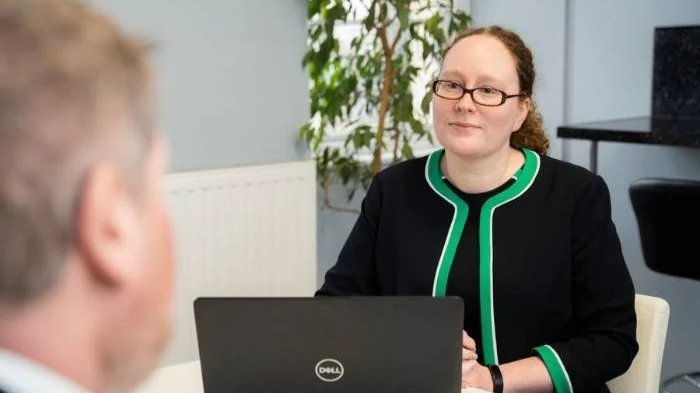

Overseas Use and Legalisation of Documents
Notarisation can often be only one stage of the process. Many countries require an additional level of authentication before a document can be accepted for official use.
Depending on the destination country, this may involve obtaining an Apostille from the Foreign, Commonwealth & Development Office or further legalisation through the relevant embassy or consulate.
As requirements differ between jurisdictions, it is important that documents are prepared correctly from the outset. Claire can assist with the notarisation process and arrange any additional legalisation requirements where necessary, helping to avoid unnecessary delays.
What Information Will My Business Need to Provide?
Before notarising a business document, a notary must carry out checks to verify the identity of the individuals involved and confirm that they have the authority to act on behalf of the organisation.
Depending on the circumstances, you may be asked to provide:
Proof of identity
Proof of address
Company registration details
Evidence of authority to sign on behalf of the business
Copies of relevant corporate documents
Details of the country in which the document will be used
These checks are an important part of the notarisation process and help ensure that documents are accepted by the receiving authority.
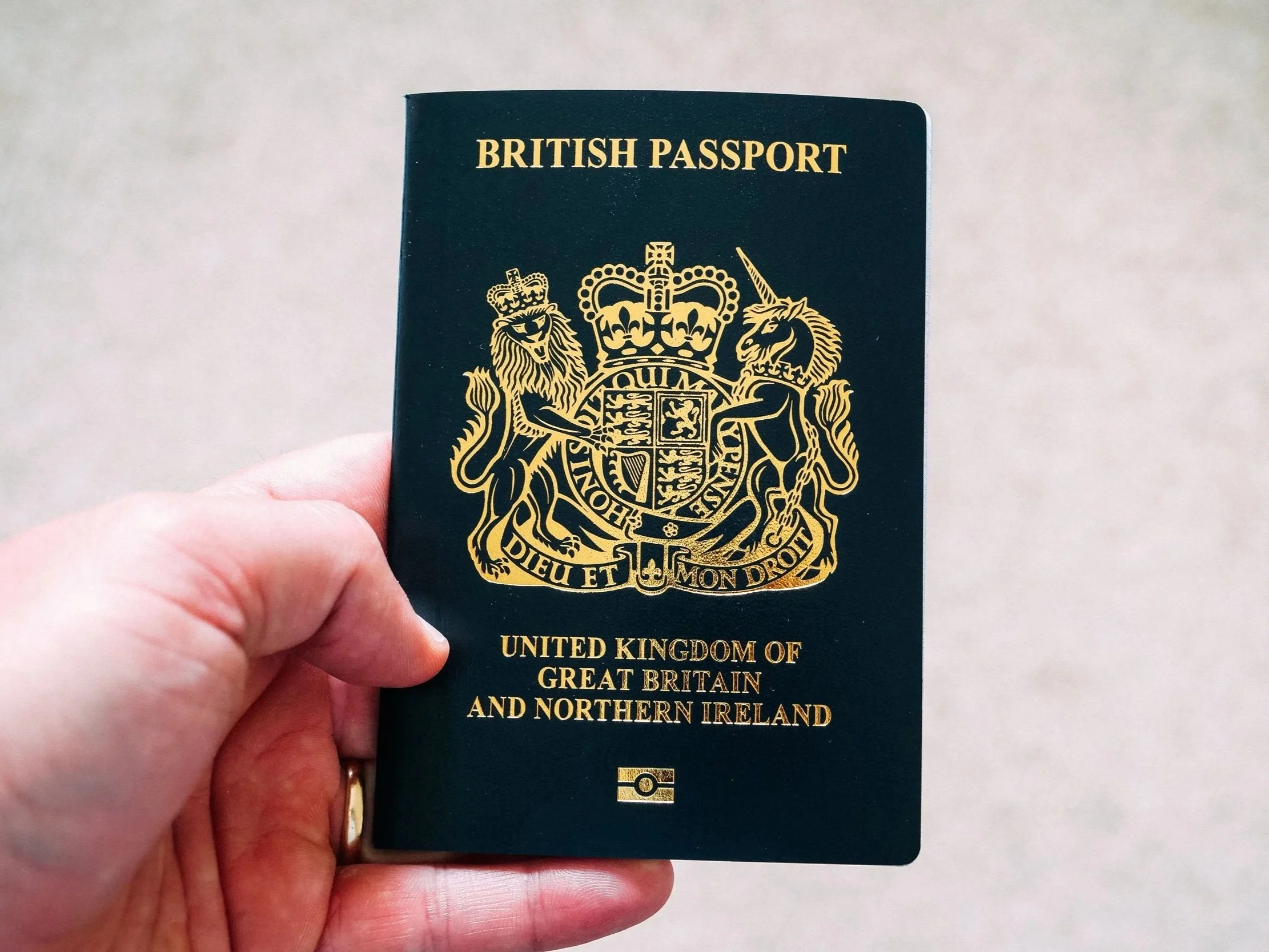

Can Business Documents Be Notarised Remotely?
In some circumstances, it may be possible for elements of the notarisation process to be completed remotely. Whether this is suitable will depend on the nature of the document, the requirements of the receiving country and the level of verification required.
Many overseas authorities continue to require original documents and face-to-face identification. For this reason, remote appointments are not appropriate in every case.
If you require urgent assistance or are unable to attend in person, Claire can discuss the available options and advise on the most suitable approach.
How Much Do Business Notary Services Cost?
The cost of notarisation will depend on several factors, including the type of document, the number of documents involved, the level of verification required and whether legalisation is also needed.
If your matter involves multiple documents, urgent timescales or additional legalisation requirements, these factors may affect the overall fee.
As every matter is different, it is difficult to provide a fixed fee without understanding the specific requirements. Claire will provide a clear indication of costs at the outset.


Supporting Businesses Across Plymouth, Devon and Cornwall
Businesses operating internationally often face tight deadlines and complex administrative requirements. Delays in obtaining correctly notarised documents can impact transactions, overseas registrations and commercial relationships.
Claire works with companies of all sizes, from owner-managed businesses to larger organisations, providing a responsive service designed to meet commercial timescales. Whether you require a single document notarised or assistance with a larger international transaction, Claire can guide you through the process and ensure your documents are prepared correctly for their intended use.
Related services
As you’re reading our Business Notary Services page, you might be interested in having a look at our related services below.




Frequently asked questions
-
A solicitor’s main concern is to act in the best interest of their client. In their role they can advise and represent their client to assist them in achieving their aims. In contrast a Notary’s main concern is to ensure that the documents that they notarise are legally authentic. A Notary does not provide legal advice or representation and must remain completely impartial.
A solicitor is not automatically entitled to provide Notary Services. A Notary is a separate qualification which requires additional training. All Notaries must complete a two year training course and a practical tuition course. They must undergo background checks and obtain a certificate of good character. New Notaries are subject to a period of supervision.
-
If you are dealing with a matter that has a foreign element you would usually be told that a document is required to be notarised by the person acting for you in the matter or you may be sent a document which states that it is required to be notarised.
-
An Apostille is a certificate which is internationally recognised and is used to authenticate public documents. In England the Apostille is issued by the FCDO (Foreign Commonwealth & Development Office). It acts as an extra layer of protection confirming the signature, seal or stamp on the document to be genuine. The Apostille is accepted by countries who are members of the Hague Apostille Convention who, generally, don’t then require any further form of certification.
-
Consular Legalisation in when a document is authenticated at the Embassy or High Commission of the country where the document is to be used. It is generally required for countries who are not members of the Hague Apostille Convention.
-
This will depend on whether or not the document requires any amendments or any supporting evidence is required before it can be notarised. The notarisation itself can usually be completed in one appointment once the document or documents are ready to be notarised.
-
Yes, a notary can refuse to notarise a document for a number of reasons such as:
• Inability to authenticate the document, the information contained within it or the person presenting the document
• The person who is signing the document lacks the capacity to do so or there is a concern about fraud, coercion or duress
• The document is incomplete
• There is a conflict of interest
-
The role of a Notary is to authentic documents. They do not offer legal advice. For detailed legal advice, consulting a solicitor who specialises in international business law is recommended.
-
You will usually need to bring the document requiring notarisation together with evidence of identity and address for the individual signing.
You may also need to provide company documentation, such as evidence of your position within the business or authority to sign on behalf of the company. This might include company registers, board resolutions or similar internal authorisation documents depending on the nature of the transaction.
Claire will confirm exactly what is required before your appointment so that the process can be completed efficiently.
-
Not necessarily. This will depend on the document itself and the requirements of the organisation or country requesting it.
Where a document requires execution by multiple directors or authorised signatories, it may be necessary for all relevant individuals to attend. In other cases, one authorised representative may be sufficient, provided appropriate authority can be evidenced.
Claire will advise on the correct approach based on the document and its intended use.
-
Yes, where possible. Businesses often require notarisation to meet tight commercial deadlines, particularly for overseas transactions, regulatory filings or banking requirements.
Where urgency is involved, early contact is recommended so that identification, document review and any legalisation steps can be managed without delay. Every effort will be made to accommodate time sensitive instructions. We recommend contacting Claire as soon as you can in these circumstances.
What our clients say
-
![5 star Google rating leading Plymouth solicitor]()
Recently had the need to get advice and subsequent legal work done. Prompt initial appointment and follow up with Kearney. Very friendly and efficient. All necessary work and options explained. And all work done very quickly. Thank you
5* Google review
-
![5 star Google rating leading Plymouth solicitor]()
We have recently had new wills prepared by Claire Thompson. The service we received from Claire was fantastic- her professionalism, knowledge and advice made the whole process easy for us. Thank you Claire.
5* Google review
-
![5 star Google rating leading Plymouth solicitor]()
Their excellent service and superb customer care has not faltered and I must thank David Cornelius who has been particularly helpful to me over the years - either in dealing with my matter or directing me to his always professional, helpful and friendly colleagues.
5* Google review
-
![]()
Once again we have enjoyed polite and professional service at a reasonable price. You just know with Nash & Co you are going to be treated with respect and care which made our Will writing a straightforward experience. A big thank you to David Cornelius and Amy Douch.
5* Google review
-
![5 star Google rating leading Plymouth solicitor]()
My husband and I recently instructed Nash & Co to assist with redrafting our Wills. We met with David Cornelius and Claire Thompson, both extremely friendly, helpful and professional. The entire process was quick, efficient and costs were very reasonable.
5* Google review
-
![]()
I have found the prospect of redrafting a will and the process of setting up a trust daunting. I am so grateful to Nash & Co and particularly David Cornelius and Amy Douch for their understanding, professionalism, patience, and the ability to make legal terms clear and comprehensible to my layman’s ears. Especial thanks to Amy
5* Google Review
-
![5 star Google rating leading Plymouth solicitor]()
My wife and I have used Nash & co for our property sales and wills. We recently amended our wills and this was carried out by Amy Douch. Amy was very friendly and professional throughout the procedure giving good advice and enlightening us on some facts we were unaware of. The price she quoted remained the same with no 'hidden' extras. It was a pleasure to deal with Amy who is a credit to Nash & Co.
5* Google review
-
![5 star Google rating leading Plymouth solicitor]()
Once again we have enjoyed polite and professional service at a reasonable price. You just know with Nash & Co you are going to be treated with respect and care which made our Will writing a straightforward experience. A big thank you to David Cornelius and Amy Douch.
5* Google review
-
![5 star Google rating leading-Plymouth-solicitor]()
Always a very professional but friendly experience with clear precise advice & information from the wills section. A good company to deal with & reasonable costs too.
5* Google review

Related insights


Meet the Wills, Trusts, Tax and Probate team




Get in touch
Fill out the form below and let us know whether you would like us to call you, or email you. Claire Thompson will be in touch as soon as she is able to. If your enquiry is urgent then please call us on 01752 827074.