
Our environmental commitments
The environmental footprint of businesses and the collective action that we all take to counter it, is rightly becoming more and more important and high profile. As a consequence, we're making this one of our biggest goals for 2023 and beyond. Here at Nash & Co Solicitors, we’ve been putting a lot of effort into our environmental action plan, and doing what we can to reduce our impact on the environment.
We live and work in Plymouth – Britain’s Ocean City. Plymouth is the home of the world renowned Ocean Conservation Trust, the National Marine Aquarium and Britain’s first National Marine Park. With this in mind, and the fact that just over 71% of the earth is ocean, we wanted to focus our environmental commitments towards the oceans, sea life and seagrass in particular.
Our partnerships and environmental work
National Marine Aquarium (NMA) and Ocean Conservation Trust (OCT)
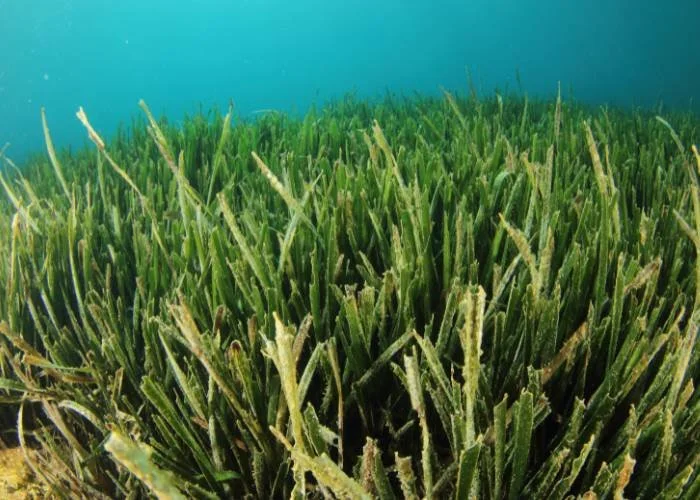
We live in Plymouth – Britain’s Ocean City. This is the home of the Ocean Conservation Trust, the National Marine Aquarium and Britain’s first National Marine Park. With this in mind, and the fact that just over 71% of the earth is ocean, why wouldn’t we focus our environmental commitments towards the oceans, sea life and seagrass in particular.
Seagrass offers a highly efficient and long-lasting method of combating climate change. Seagrass is one of the Ocean’s most important habitats, providing a nursery ground for many commercial fish stocks and acting as a haven for many marine animals including rare seahorses, stalked jellyfish, and rare seaweeds. Seagrass also stabilises sediments and prevents coastal erosion, as well as having the capacity to absorb carbon more efficiently than terrestrial habitats – making it an important player in the fight against climate change. Despite this, seagrass is considered critically endangered and is an EU Red Listed habitat due to the damage regularly caused to the slow-growing beds from boaters, walkers and fishermen.

The OCT (alongside the NMA), is one of five partners in a large-scale conservation project called ReMEDIES (Reducing and Mitigating Erosion and Disturbance Impacts affecting the Seabed). The project is run by Natural England and sees 5 Special Areas of Conservation (SACs) safeguarded for future generations. We’re helping to fund the work that the OCT are doing in restoring a seagrass meadow just off of Jennycliff, within the Plymouth National Marine Park.
As with our community support, this isn’t (and never will be) a case of simply paying money and getting on with our lives. We want to help wherever we can, and over the next few years, will be working with the OCT and NMA to make more of an impact as a firm, encouraging lawyers and our staff to take part in beach (and land) cleans, and getting involved directly with the seagrass project itself.
Find out more about the Ocean Conservation Trust and the National Marine Aquarium by clicking the relevant link.
Whale and Dolphin Conservation

We are currently recognised as one of the main corporate partners of Whale and Dolphin Conservation – one of the biggest charities looking after sea mammals, anywhere in the world.
Whales play a massive role in the environment. For example, a single blue whale can store within itself the equivalent of approximately 825 trees worth of carbon – that’s a whole swimming woodland!
Whales also support an immense amount of life: they feed on prey at depths and return to the surface, transporting vital limiting nutrients to the uppermost layer of the ocean. Their gigantic ‘faecal plumes’ bring iron, nitrogen and phosphorous to the surface, where they are taken up by phytoplankton – suspended microscopic plants. As they migrate, they transport ocean fertilisers from nutrient-rich polar regions to locations across the world, keeping tropical coral reef and lagoon systems bustling with biodiversity. Even when they die they help us, by sinking to the deep sea, where they sequester the carbon stored in their bodies for thousands of years.

More whales mean more CO2 fixation, storage and sequestration, more biodiversity, and a more resilient ocean system, which in turn means a more resilient climate. If we can work together to help restore blue whales to their pre-whaling numbers, this would have the same impact on the climate as planting more than 280 million trees.
We’re delighted to be able to support the work done by the incredible people at Whale and Dolphin Conservation. They are on a mission to create a world where every whale and dolphin is safe and free. As part of this, they are working to create safer seas from the threats of pollution, vessel collisions, and accidental entanglement in fishing gear, and to stop cruelty from deliberate harm in captivity.
Find out more about the incredible work that WDC do here.
Business Declares

We joined Business Declares a couple of years ago. It’s a community of businesses, all of whom have declared a climate and ecological emergency, and are taking purposeful action to reach carbon neutrality.
It’s an exciting community to be part of, with a lot of support for it’s members – and we share membership with some huge names, that you’ll no doubt be very familiar with!
You can find out more about Business Declares here.
Beaumont Park
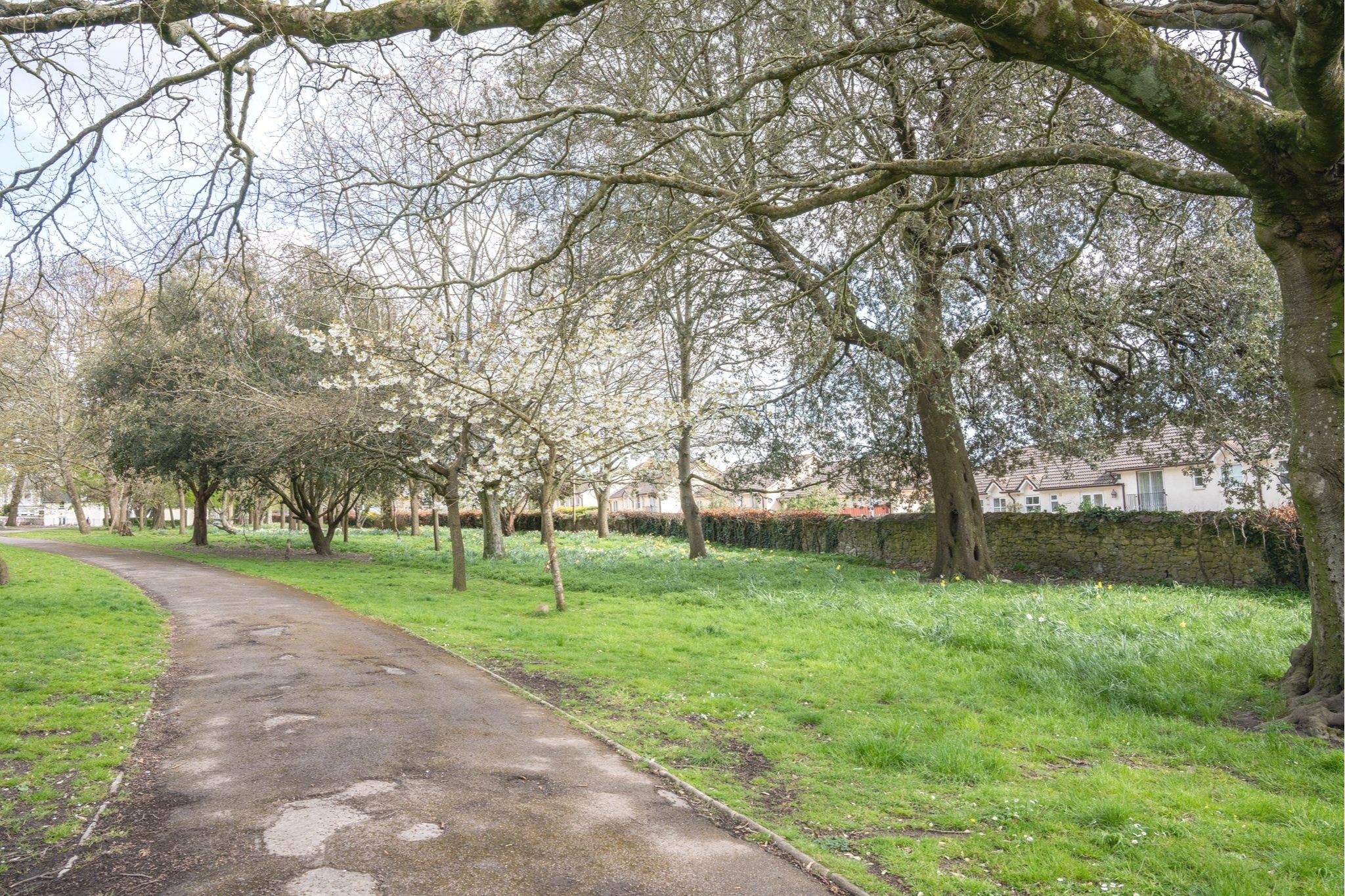
Our offices, here in Beaumont House, sit in Beaumont Park, which, until recently, was the only Park in the city that didn’t have a “Friends of” group attached to it. But we’ve now established this group and we’ll now be growing this group and involving the local community in the future of the park.
However, since 2021, we’ve been doing a lot of work in the park ourselves, along with a number of key partners. Together with the fantastic Veterans Outdoors, we’ve built a wildlife pond, bird and bat boxes, we’ve planted trees, established a wildlife and educational area of the park, we’ve built a number of bug houses and we’ve replaced the rotting and old climbing rose trellises. With the help of YGS Landscapes, and the veterans again, we’ve now fitted out the wildlife area, and put in place a number of hedgehog houses. And finally, with the help of Pollenize CIC, we’ve planted a number of wildflower areas in the park – this is something that we’ll be looking to do more of as the year goes by.

Over the last couple of years, we’ve built a really strong relationship with Holy Cross Roman Catholic Primary School, which is directly opposite our office. We’ve then been able to get the school involved in the environmental work that we’re doing in the park – encouraging the children to get involved with sewing the wildflower seeds, and filling the bug houses.
The work that we’re doing in the park is not just an environmental project for us, it’s also about inspiring young people and the park users to do the same kind of work in their gardens and green spaces.
Over the next 12 months, we’ll be planting more trees, establishing more flower beds in the park, and getting more children involved in the work that we’re doing.
Our own office

We know that the everyday choices we make as a business can have an impact on the environment, so we’re taking practical steps to reduce that impact wherever we can.
That starts with the space around our own offices. We’re working with a local wildlife gardener to make more of our grounds welcoming to nature. We’re planting new trees and pollinator-friendly plants, while allowing areas of grass to grow longer so that wildflowers and other plants that support bees and other pollinators have a chance to thrive.
Inside the office, we’re looking at the small changes that can collectively make a difference. We’ve reduced our reliance on paper and, where printing is necessary, we use FSC-certified paper from responsibly managed sources. We print double-sided and in black and white wherever possible to reduce the amount of paper and toner we use.
We’ve also removed single-use plastics and disposable cups from our offices and, where it is appropriate, we send documents to clients electronically rather than through the post.
We encourage everyone at Nash & Co to be mindful of the energy they use too, whether that means switching off lights in empty rooms or making sure computers and monitors aren’t left running overnight.
None of these things will change the world on their own, and we know there is always more that businesses can do. But we believe it is important to keep looking at the way we work, make better choices where we can and take responsibility for reducing our impact on the environment.

We’ve also been looking at how we manage our waste. We’re a zero-to-landfill business, which means our waste is either recycled or sent to our local energy-from-waste facility. We’ve been steadily increasing the proportion that is recycled over the past few years and we want that to continue.
We’re making changes to the way we use energy too. We’ve turned down the heating in our offices and are gradually replacing older lighting with more energy-efficient, longer-lasting LED bulbs.
We also want to make it easier for our people to choose different ways of getting to work. We’ve installed six electric vehicle charging points in our car park and created secure bike storage. We’ve even converted one of our rooms into a shower room, making it more practical for people who want to walk, run or cycle to work, or get outside and exercise during their lunch break.
We’re looking at the smaller details too. Even the tea bags in our kitchen are Rainforest Alliance Certified.
There’s still more we can do. For us, being more environmentally responsible isn’t about making a few changes and deciding the job is done. It’s about continuing to look at how we work, finding practical ways to improve and making better choices wherever we can.
Our Carbon Footprint
We know that the easiest way for us to make a difference is to reduce our carbon footprint. Approximately 81% of all Green House Gases (GHG) are carbon emissions. The rest are made up of Methane, Nitrous oxide and fluorinated gases. In order to reduce out footprint, it’s vital that we measure our carbon footprint every year, starting with last year. When measuring and publishing our carbon footprint, we need to identify a time frame that the footprint represents. Therefore our carbon footprint reporting year will run from January 1st to December 31st each year.
In 2022, our Carbon Footprint was 42.3 tonnes.
In order to calculate this, we have used our Scope 1 and Scope 2 emissions. We have not added in Scope 3 emissions associated with staff commuting and business purchases.
We’re doing all we can to constantly make improvements throughout the year and won’t be satisfied until we’re able to say that we’re carbon neutral.
We are committed to halving our emissions by 2030, and being carbon neutral by 2035.
