
Commercial Property Solicitors for Cornwall
If you are looking for experienced Commercial Property Solicitors in Cornwall, Nash & Co Solicitors provides clear, commercially focused legal advice to businesses, investors and developers throughout the county.
Commercial property is at the heart of Cornwall’s economy. From tourism and hospitality businesses along the coast to expanding industrial estates, office developments and retail premises inland, property decisions shape the success and long-term stability of organisations across the region. Our role is to ensure that every transaction, lease or development is structured properly, managed efficiently and aligned with your wider commercial objectives.
We act for clients across Cornwall including owner-managed businesses, property investors, developers and national occupiers entering the local market. Whether you are taking on a new commercial lease, negotiating a lease renewal, buying or selling commercial property in Cornwall, or progressing a development site acquisition, our team provides practical advice you can rely on.

arrow_back Back to Commercial Property

Commercial leases and lease renewals in Cornwall
Well-drafted commercial leases are fundamental to protecting both landlords and tenants. Our commercial property solicitors for Cornwall advise on all aspects of commercial leasing, ensuring that agreements reflect your commercial goals and minimise long-term risk.
We act for landlords granting new leases of offices, retail units, industrial premises and hospitality venues across Cornwall. We also advise tenants taking on new premises, reviewing lease terms carefully to address rent review provisions, repairing obligations, service charge structures, break clauses and alienation rights.
Lease renewals are another key area of our work. Whether your renewal falls within the Landlord and Tenant Act 1954 or is being negotiated outside the Act, we provide clear advice on strategy, timing and risk. We work to secure commercially workable outcomes while protecting your position.
We also assist with lease assignments, underletting, licences to alter, deeds of variation, break notices and surrenders. For businesses operating across Cornwall’s seasonal economy, flexibility within lease arrangements can be critical, and we ensure that documentation reflects operational realities.
Buying and selling commercial property in Cornwall
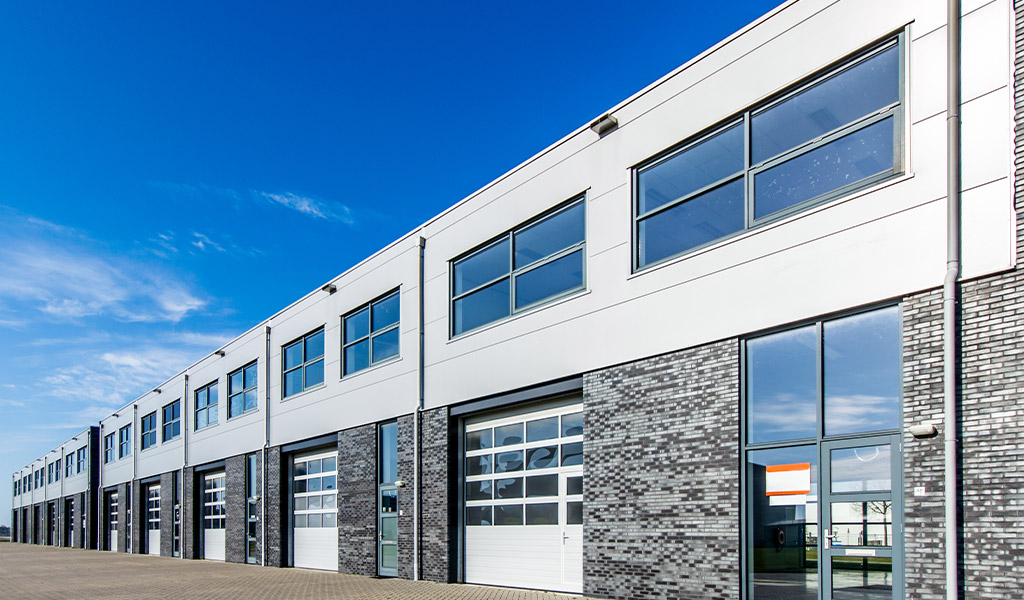
Buying or selling commercial property in Cornwall requires careful legal due diligence and proactive transaction management.
Our commercial property solicitors handle acquisitions and disposals of:
Offices and business premises
Retail units and shopping parades
Industrial and warehouse space
Hotels, restaurants and hospitality venues
Mixed-use and investment properties
When acting on a purchase, we investigate title, planning history, rights of way, restrictions and environmental matters. We liaise with lenders where funding is involved and ensure that contracts are structured to manage risk appropriately.
For sellers, we prepare comprehensive legal packs, respond to enquiries efficiently and manage the transaction through to completion. Our focus is on minimising delays and ensuring that the sale progresses smoothly, particularly where onward investment or reinvestment is planned.
We understand the pace of the commercial property market in Cornwall and the importance of clear communication between agents, surveyors, accountants and funders. Our established referral network across the county helps facilitate coordinated and efficient transactions.
call Speak to one of our Commercial Property Solicitors on 01752 827013

Site acquisition and commercial development in Cornwall
Site acquisition in Cornwall often involves complex legal and planning considerations. Coastal locations, regeneration zones, infrastructure constraints and environmental factors all influence strategy.
Our commercial property solicitors advise developers and investors on site acquisition in Cornwall, including conditional contracts and option agreements. We structure transactions to manage planning risk and ensure that development viability is protected from the outset.
We regularly advise on overage arrangements, promotion agreements and pre-let structures, helping clients secure funding and commercial certainty before development proceeds. Where projects involve both commercial and residential elements, we provide coordinated advice to ensure all documentation aligns with the overall scheme.
Section 106 agreements are frequently central to development projects in Cornwall. We advise on negotiating and reviewing Section 106 obligations, ensuring that contributions, infrastructure requirements and affordable housing provisions are clearly understood and commercially manageable. Early and strategic advice at this stage can significantly reduce risk and delay later in the process.

Ongoing commercial property support across Cornwall
Beyond transactional work, we provide ongoing commercial property support to landlords, tenants and investors throughout Cornwall.
This includes portfolio management advice, licences to alter, underlet or assign, deeds of variation and the resolution of title issues such as first registration and adverse possession claims. For businesses with property as a core asset, proactive legal support helps preserve value and avoid unnecessary disputes.
We also work closely with commercial agents, chartered surveyors, accountants, lenders and planning consultants across Cornwall. This collaborative approach ensures that clients receive joined-up advice across all aspects of their property transactions and development projects.

Why choose Nash & Co Solicitors as your commercial property solicitors for Cornwall
When instructing commercial property solicitors, experience and local knowledge matter.
Our team combines technical expertise with a practical understanding of how property supports business growth in Cornwall. We appreciate the commercial pressures facing local businesses, the importance of timing in the tourism and leisure sector, and the increasing demand for high-quality industrial and office space across the county.
We focus on clear advice, responsive communication and commercially realistic solutions. Many of our clients rely on us for repeat transactions, lease renewals and development projects because we take the time to understand their long-term objectives rather than viewing each instruction in isolation.
We believe in providing exceptional client service, throughout the work that we do. This is born out in our Google Reviews, where we have the most and the highest score of any law firm in Cornwall, Devon, Somerset, Bristol and Dorset.
If you are buying or selling commercial property in Cornwall, negotiating a commercial lease or lease renewal, progressing a site acquisition or dealing with a Section 106 agreement, our Commercial Property Solicitors are here to support you.
Frequently asked questions
In this comprehensive video series, our experienced commercial property solicitors will address a wide range of topics and questions that commonly arise in commercial property ventures. We understand that commercial real estate can be complex and nuanced, so we've curated this series to provide you with practical information and valuable insights.
-
Options, conditional contracts, and pre-emption agreements are all legal instruments used in commercial property development to manage the risk of property development. Here are some key differences between them:
Options: An option is a legal agreement that gives the purchaser the right, but not the obligation, to purchase a property at a predetermined price and within a predetermined time frame. The purchaser pays a premium for the option, which is typically a percentage of the purchase price. The option holder can choose whether or not to exercise the option, depending on the market conditions and other factors.
Conditional contracts: A conditional contract is an agreement between the seller and purchaser that sets out the conditions that must be met before the contract becomes binding. These conditions can include obtaining planning permission, securing funding, or completing a feasibility study. The contract will only become binding once all the conditions have been satisfied.
Pre-emption agreements: A pre-emption agreement is a legal agreement between a seller and a purchaser that gives the purchaser the right of first refusal if the property is ever put up for sale. The seller must give the purchaser the opportunity to purchase the property at a predetermined price before offering it to any other potential buyers.
The key difference between these three instruments is the level of commitment involved. Options offer the purchaser the flexibility to choose whether or not to proceed with the purchase, whereas conditional contracts and pre-emption agreements are more binding. With a conditional contract, the purchaser is committed to purchasing the property once the conditions have been met. With a pre-emption agreement, the purchaser has the right to purchase the property if the seller decides to sell it, but is not obligated to do so.
Ultimately, the choice of which instrument to use will depend on the specific circumstances of the property development project and the preferences of the parties involved. It is important to seek legal advice from a solicitor experienced in commercial property development to ensure that the legal instrument used is appropriate for your needs.
-
Overage, also known as clawback, is a term used in commercial property development to describe a mechanism that enables the seller of a property to receive additional payment after completion of the sale, in the event that certain specified events occur. Typically, these events relate to the subsequent use or development of the property, and the overage payment is triggered if the buyer's use or development of the property exceeds certain specified criteria.
For example, a seller may agree to sell a piece of land to a developer for a fixed price, but may also require that if the developer obtains planning permission to build more units on the land than initially agreed, or if the developer sells the land or developed units for a higher price than expected, the seller will receive an additional payment.
Overage can be structured in various ways, such as a percentage of the increase in value, a fixed sum, or a percentage of the sale proceeds. Overage agreements are typically complex and require careful negotiation and drafting to ensure that they are clear, enforceable, and not unduly burdensome for either party.
-
CIL stands for Community Infrastructure Levy, which is a charge that local authorities in England and Wales can impose on certain types of new development to help fund infrastructure projects in the local area. The CIL was introduced by the UK government in 2010 as part of a package of reforms to the planning system.
CIL applies to most new development, including commercial property development, that involves the creation of more than 100 square metres of gross internal floor space or the creation of one or more new dwellings. It does not apply to development that is exempt, such as some types of affordable housing or certain types of charitable development.
The amount of CIL payable is calculated based on the size and type of development, as well as the location of the development and the policies of the local authority. The CIL rates and policies can vary between different local authorities.
The developer is responsible for paying the CIL, which is usually payable in instalments over the course of the development. Failure to pay the CIL can result in enforcement action by the local authority.
It's important for developers to consider the potential CIL liability when planning a new development, as this can have a significant impact on the viability of the project. It's also important to engage with the local authority early in the planning process to understand the CIL policies and rates that apply in the local area.
-
Section 106 (s106) and Section 278 (s278) Agreements are legal agreements that are commonly used in commercial property development to secure planning permission and provide for the necessary infrastructure and facilities to support the development.
A s106 Agreement is a legal agreement between a developer and the local planning authority that sets out certain obligations and conditions that the developer must comply with as a condition of obtaining planning permission. These obligations can include requirements for affordable housing provision, contributions towards infrastructure and community facilities, and measures to mitigate the impact of the development on the local environment.
A s278 Agreement is a legal agreement between a developer and the highway authority that sets out the developer's obligations to provide and maintain any necessary highway works, such as new access roads or roundabouts, as a condition of obtaining planning permission. These agreements can also cover other aspects of transport infrastructure, such as cycle paths, footpaths, and bus stops.
Both s106 and s278 Agreements are binding legal agreements that run with the land and are enforceable against the developer and any future owners of the land. They are designed to ensure that the necessary infrastructure and facilities are provided as part of the development, and to mitigate the impact of the development on the local area.
It's important for developers to engage with the local planning authority and highway authority early in the planning process to understand the requirements for s106 and s278 Agreements and to negotiate the terms of the agreements. Failure to comply with the terms of these agreements can result in enforcement action by the relevant authority, which can delay or even halt the development.
-
Acquiring development land and seeing the project through to completion can be a lengthy and complex process. Here is a more detailed overview of the typical steps involved:
Identify and assess potential development sites: The first step is to identify and assess potential development sites. This involves evaluating factors such as location, accessibility, planning restrictions, zoning, and market demand.
Secure the site: Once a suitable site has been identified, the developer must secure the land through purchase or lease, subject to the necessary planning permissions and other legal agreements.
Conduct feasibility studies: The developer must then conduct feasibility studies to assess the viability of the proposed development, including environmental impact assessments, soil reports, and market research.
Obtain planning permission: The developer must obtain planning permission from the local council or relevant authority, which can involve a lengthy and complex process. This can include community consultation, environmental assessments, and negotiations with local authorities.
Secure funding: The developer must secure funding for the project, which may involve obtaining loans or investments from banks, private investors, or government schemes.
Construction: The construction phase involves working with architects, engineers, and contractors to design and build the development. This may involve obtaining building permits and complying with various regulations and safety standards.
Marketing and sales: Once construction is complete, the developer must market and sell the units, which may involve working with estate agents and marketing firms to attract potential buyers.
Disposal: Finally, the developer must dispose of the completed units, which may involve selling them individually, leasing them, or selling them to an institutional investor. This may also involve refinancing the project or returning capital to investors.
What our clients say
-
![5 star Google rating leading Plymouth solicitor]()
Nick Winslet and his support staff have been incredible throughout the process and I cannot recommend Nash highly enough for their speed and diligence on a very difficult matter. Thank you so much.
5* Google review
-
![5 star Google rating leading Plymouth solicitor]()
Chloe at Nash and co had a very difficult job, but was handled very professionally and we were kept up to date with what was going on. We will use Nash and co in the future if needed. Thank you
5* Google review
-
![5 star Google rating leading-Plymouth-solicitor]()
We worked with Nick Winslet from the Commercial property team at Nash & Co to assist in land purchase. Despite a challenging and drawn out process Nick remained diligent, and persevered with the vendors and their legal team to enable us to complete on our purchases. He went out of his way to help us, explaining everything in detail when asked. We have and will continue to recommend them.
5* Google review
-
![5 star Google rating leading Plymouth solicitor]()
Excellent service from start to finish. Based on many recommendations, Nick Winslet was my chosen Solicitor, up to date information, great communication, honest, prompt and always on the ball throughout the transaction. I can not rate Nick and his team highly enough.
5* Google review
-
![5 star Google rating leading Plymouth solicitor]()
Chloe Hamblin at Nash & Co did an excellent job of selling our land, guiding us calmly through 3 false starts, before succeeding recently. Well done.
I thoroughly recommend Chloe and Nash & Co who are fortunate to have her.
5* Google review
-
![5 star Google rating leading Plymouth solicitor]()
The team at Nash and co have been absolutely brilliant start to finish on our house sale and purchase. Our original conveyancer who I have known for many years retired halfway through our transaction which was then taken over by Chloe. Chloe was professional, friendly and kept us informed every step of the way. Alex was also great throughout. I can't thank them both and Nash and co enough for helping us purchase our dream house!
5* Google review
-
![5 star Google rating leading Plymouth solicitor]()
I've just wrapped up a more complex than normal residential purchase with Chloe Hamblin. I just wanted to take the time to quickly make aware how wonderful I found working with her. I couldn't be more pleased with how I was dealt with. Throughout the process I was made to feel like I was listened to and a valued client.
5* Google Review
-
![5 star Google rating leading Plymouth solicitor]()
Thanks Rebekah, thoroughly professional and timely service.
5* Google review
-
![5 star Google rating leading Plymouth solicitor]()
Couldn't be happier with the service provided by Chloe at Nash & Co. From the moment we instructed we were kept up to date with all developments. All of our queries and questions we asked were dealt with without being made to feel silly for asking them, and Chloe represented us perfectly. Would recommend Chloe at Nash & Co without reservation.
5* Google review

Related insights






Meet the Commercial Property team


Get in touch
Fill out the form below and let us know whether you would like us to call you, or email you. One of our Commercial Property team will be in touch as soon as we can.
If your enquiry is urgent then please call us on 01752 827073.
arrow_back Back to Commercial Property